

Rotator cuff tears are a common cause of shoulder pain and dysfunction, affecting individuals of all ages. The rotator cuff is a group of four muscles and their tendons that stabilize the shoulder. A tear can occur acutely after trauma or develop gradually due to overuse, aging, or degenerative changes. This article outlines the causes, diagnosis, treatment options, and postoperative care for rotator cuff tears, with a focus on surgical intervention through arthroscopic rotator cuff repair.
How Common It Is and Who Gets It? (Epidemiology)
Rotator cuff tears primarily affect middle-aged and older individuals. They may occur as a result of trauma, like a fall or accident, or more commonly, due to chronic overuse, particularly in activities like racquet sports, swimming, or lifting. The condition can also be seen in individuals with certain risk factors, such as aging, repetitive overhead motions, and underlying tendon degeneration.
Why It Happens – Causes (Etiology and Pathophysiology)
Most rotator cuff tears are caused by long-term wear and tear on the tendons, often exacerbated by activities that involve repetitive arm movements, particularly overhead motions. In younger individuals, an acute tear might be the result of trauma, but in older individuals, the tendons may degenerate, and bone spurs may form on the undersurface of the acromion, causing friction and leading to tears.
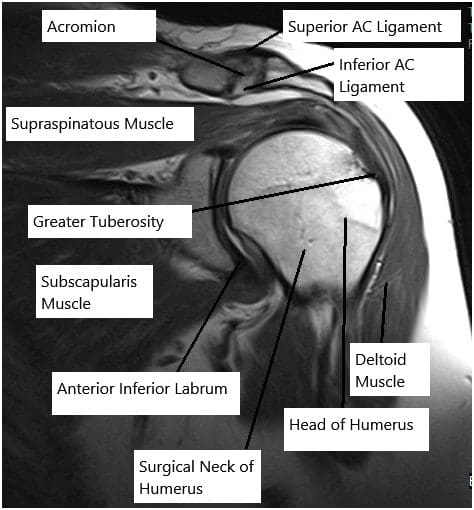
MRI of the shoulder joint
How the Body Part Normally Works? (Relevant Anatomy)
The rotator cuff stabilizes the shoulder joint, allowing for a wide range of motion. It consists of four muscles:
- Supraspinatus
- Infraspinatus
- Teres minor
- Subscapularis
These muscles help the shoulder rotate and move the arm in multiple directions. A tear in any of these tendons leads to weakness, pain, and limited motion in the shoulder, affecting daily activities such as lifting, reaching, or overhead movements.
What You Might Feel – Symptoms (Clinical Presentation)
Symptoms of rotator cuff tears may include:
- Pain: Often felt on the side or front of the shoulder, especially with overhead activities.
- Weakness: Difficulty lifting objects or raising the arm overhead.
- Limited Motion: Reduced ability to rotate or raise the arm.
- Night Pain: Waking up due to shoulder discomfort, especially when lying on the affected side.
- Pseudoparalysis: A sudden loss of shoulder function in the case of an acute tear.
How Doctors Find the Problem? (Diagnosis and Imaging)
Diagnosis begins with a physical examination, where the physician tests shoulder strength and range of motion. Several specific tests, such as the Drop Arm Test or Neer Impingement Test, are used to identify rotator cuff tears. Imaging studies are critical for confirming the diagnosis:
- X-rays: To rule out bone spurs or other bony abnormalities.
- MRI: Provides detailed images of the soft tissues, including the rotator cuff, and helps determine the size and extent of the tear.
Classification
Rotator cuff tears are classified by severity:
- Partial Tears: Involve damage to part of the tendon but not a full rupture.
- Full-Thickness Tears: Complete tears where the tendon is severed.
Tears can also be categorized by size (small, medium, large, or massive) and the degree of muscle atrophy.
Other Problems That Can Feel Similar (Differential Diagnosis)
Conditions that may mimic a rotator cuff tear include:
- Acromioclavicular (AC) Joint Arthritis
- Impingement Syndrome
- Cervical Radiculopathy
- Labral Tears
- Biceps Tendonitis
ROTATOR CUFF TENDINITIS
Treatment Options
Non-Surgical Care
- Rest and Ice: To reduce inflammation and alleviate pain.
- Physical Therapy: Exercises to strengthen shoulder muscles, improve range of motion, and reduce stress on the rotator cuff.
- NSAIDs: For pain relief and inflammation control.
- Cortisone Injections: To reduce inflammation, especially if conservative treatments fail.
Surgical Care
If conservative treatments fail, surgery may be necessary. The most common surgical option is arthroscopic rotator cuff repair.
Surgical Technique
The procedure involves small incisions through which an arthroscope (a camera) is inserted to view the inside of the joint. The surgeon then uses specialized instruments to repair the torn tendon by reattaching it to the bone using sutures and anchors. Bone spurs on the acromion may also be removed to reduce friction on the rotator cuff.
Postoperative Care and Rehabilitation
After surgery, the shoulder is typically immobilized in a sling for 4–6 weeks. Early rehabilitation focuses on passive range-of-motion exercises to prevent stiffness. As healing progresses, active strengthening exercises are introduced.
- Physical Therapy: Crucial to restoring mobility and strength in the shoulder. The rehabilitation process may last several months, depending on the severity of the tear and the success of the surgery.
- Recovery Time: Full recovery can take 6–12 months, with most patients able to return to daily activities within 3–6 months.
Disclaimer – The above video content is external and shows the opinion of the involved vendor.
Possible Risks or Side Effects (Complications)
While complications are rare, they can include:
- Infection: Requires antibiotics or additional surgery.
- Tendon Re-tear: A recurrent tear can occur, especially in large or massive tears.
- Stiffness: Some patients may develop limited motion, which can be addressed with further therapy or surgery.
- Hardware Issues: Problems with the sutures or anchors used to reattach the tendon can require removal.
- Nerve Injury: Though rare, nerves around the shoulder may be damaged during surgery.
Long-Term Outlook (Prognosis)
The prognosis for rotator cuff repair is generally good, with most patients experiencing significant relief from pain and improved shoulder function. Full range of motion and strength are typically restored, allowing patients to return to most daily activities. However, full recovery may take time, and some patients may still experience mild discomfort or reduced strength, particularly if the tear was large or if there were underlying health issues like smoking or diabetes.
For insurance and cost information, see our Insurance Information page.
Frequently Asked Questions (FAQ)
Q. What is rotator cuff repair surgery?
A. It’s a surgical procedure where torn tendons of the rotator cuff are reattached to the bone using sutures and anchors.
Q. How long is the recovery time for rotator cuff surgery?
A. Full recovery can take 6–12 months, but most patients can resume light activities within 3–6 months.
Q. Is rotator cuff repair surgery painful?
A. Pain is typically managed with medication post-surgery, and most discomfort resolves within a few weeks.
Q. Can I return to sports after rotator cuff surgery?
A. Patients can usually return to low-impact activities within 3–6 months, but high-impact sports may take longer.
Q. What are the risks of rotator cuff repair surgery?
A. Risks include infection, tendon re-tear, nerve damage, stiffness, and problems with the surgical hardware.
Summary and Takeaway
Rotator cuff tears are common shoulder injuries that can significantly affect quality of life. Arthroscopic rotator cuff repair provides an effective solution for many patients, offering significant pain relief and restoration of function. While the recovery process can be lengthy, most patients experience excellent outcomes with proper rehabilitation. Consulting with an orthopedic specialist is essential to determine the most appropriate treatment for each case.
Clinical Insight & Recent Findings
A recent study reviewed the surgical management of rotator cuff tears, focusing on arthroscopic repair techniques. The study highlighted that rotator cuff tears often lead to pain and weakness, particularly during overhead activities and arm rotation. While conservative treatments like physical therapy and medications are effective for tendinitis and partial tears, surgical intervention is necessary for complete tears. Arthroscopic surgery, using small incisions and a camera, allows for the reattachment of torn tendons to the bone, improving strength and mobility. Postoperative care includes physical therapy to restore function, with good outcomes reported in most cases. (“Study on rotator cuff tears – see PubMed.“)
Who Performs This Treatment? (Specialists and Team Involved)
Rotator cuff repair surgery is performed by orthopedic surgeons, particularly those specializing in shoulder and sports medicine.
When to See a Specialist?
Consult a specialist if you experience persistent shoulder pain, difficulty lifting or rotating the arm, or if conservative treatments have failed.
When to Go to the Emergency Room?
Seek immediate care if you experience severe shoulder pain, sudden loss of motion, or signs of infection after surgery, such as fever, redness, or discharge from the incision.
What Recovery Really Looks Like?
Recovery involves gradually increasing shoulder movement and strength, with physical therapy beginning within the first month. Most patients experience a significant reduction in pain and can resume daily activities within 3–6 months.
What Happens If You Ignore It?
Untreated rotator cuff tears can worsen, leading to permanent weakness, pain, and loss of function. Chronic tears may eventually require more extensive surgery.
How to Prevent It?
Strengthening the rotator cuff through exercise, avoiding repetitive overhead motions, and using proper lifting techniques can help prevent injury.
Nutrition and Bone or Joint Health
A diet rich in protein, calcium, and vitamin D supports tendon and bone health. Avoid smoking and excessive alcohol use, as these can impair healing.
Activity and Lifestyle Modifications
After recovery, maintaining shoulder strength with regular exercise can prevent future injuries. Always warm up before sports or physical activities and avoid repetitive strain on the shoulder.
The content on this page has been authored, edited, or approved by the doctors below, and was last reviewed for accuracy on May 25, 2026.